

Learning how to make a sourdough starter is the one genuinely free step in baking: flour, water, a jar, and about a week of patience produce a living culture that will raise bread for decades. There's no yeast to buy and no starter to mail-order — the wild yeast and lactic acid bacteria are already in the flour. What trips people up is the middle of the process, where a promising bubbly start goes suspiciously quiet around day three and gets thrown out one day before it would have worked. Here's the schedule that works, what each stage should look like, and how to read what your jar is telling you.
Step-by-step
Day 1: mix equal weights of flour and water
Combine 50 g whole wheat or rye flour with 50 g room-temperature water in a clean jar and stir to a thick paste — a Danish dough whisk does this in seconds without clogging. Whole grain flours carry far more wild yeast and bacteria than white, which is why they start faster; you can switch to all-purpose or bread flour later. Cover loosely (a cloth or a lid set on top, never sealed tight — fermentation makes gas that needs to escape) and leave it somewhere warm, ideally 75-80°F.
Day 2: expect little or nothing
You may see a few bubbles or absolutely no activity. Both are normal, and nothing needs to be done — you can skip feeding entirely on day 2. Resist the urge to intervene. What's happening is invisible: the flour's microbial population is waking up and competing, and the organisms that will eventually dominate haven't taken over yet.
Day 3: start the daily discard-and-feed rhythm
Now the routine begins. Discard all but about 50 g of the starter, then feed it 50 g fresh flour and 50 g water — a 1:1:1 ratio by weight. Discarding feels wasteful and is essential: without it, you'd need exponentially more flour each day, and the accumulating acidity would eventually stall the culture. You'll often see a burst of activity around now, sometimes with a sharp or funky smell. This early rise is usually driven by bacteria that will die back — it is not yet a working starter.
Days 4-5: the false-start lull (don't quit here)
This is where most starters get abandoned. Activity often drops off dramatically and the smell can turn cheesy, acetone-like, or unpleasantly sour. Nothing is wrong: the early bacterial population is being replaced by the acid-tolerant lactobacilli and wild yeast that make real sourdough. Keep feeding once every 24 hours at 1:1:1. If your kitchen runs cold, find a warmer spot — an oven with just the light on, or on top of the refrigerator.
Days 5-7: feed every 12 hours as it strengthens
When you see consistent rising and falling between feedings, switch to feeding twice a day, roughly every 12 hours. The smell should be shifting from harsh to pleasantly tangy and yeasty, like beer or yogurt. Mark the jar's level right after each feeding — a rubber band or the marker band on a starter jar — because rise height is the only objective measure of progress you have.
Know when it's ready: the double-in-4-to-6-hours test
A starter is ready to bake with when it reliably doubles in volume within 4 to 6 hours of feeding, smells pleasantly tangy, and is domed and bubbly at its peak. The classic float test — a spoonful dropped in water floats — is a decent confirmation but can mislead, so trust the doubling. Most starters reach this point between day 7 and day 14; slower is common in cold kitchens and doesn't mean failure.
Maintain it: counter or refrigerator
Baking weekly or more? Keep it at room temperature and feed once or twice daily. Baking occasionally? Store it in the refrigerator and feed once a week — pull it out, discard down, feed, let it get active for a few hours, then return it to the fridge. Before baking from a refrigerated starter, give it two or three feedings at room temperature to bring it back to full strength. Don't throw away the discard: it makes excellent pancakes, waffles, and crackers.
Recommended Gear
The gear we'd reach for. Prices shown on Amazon at click-through.
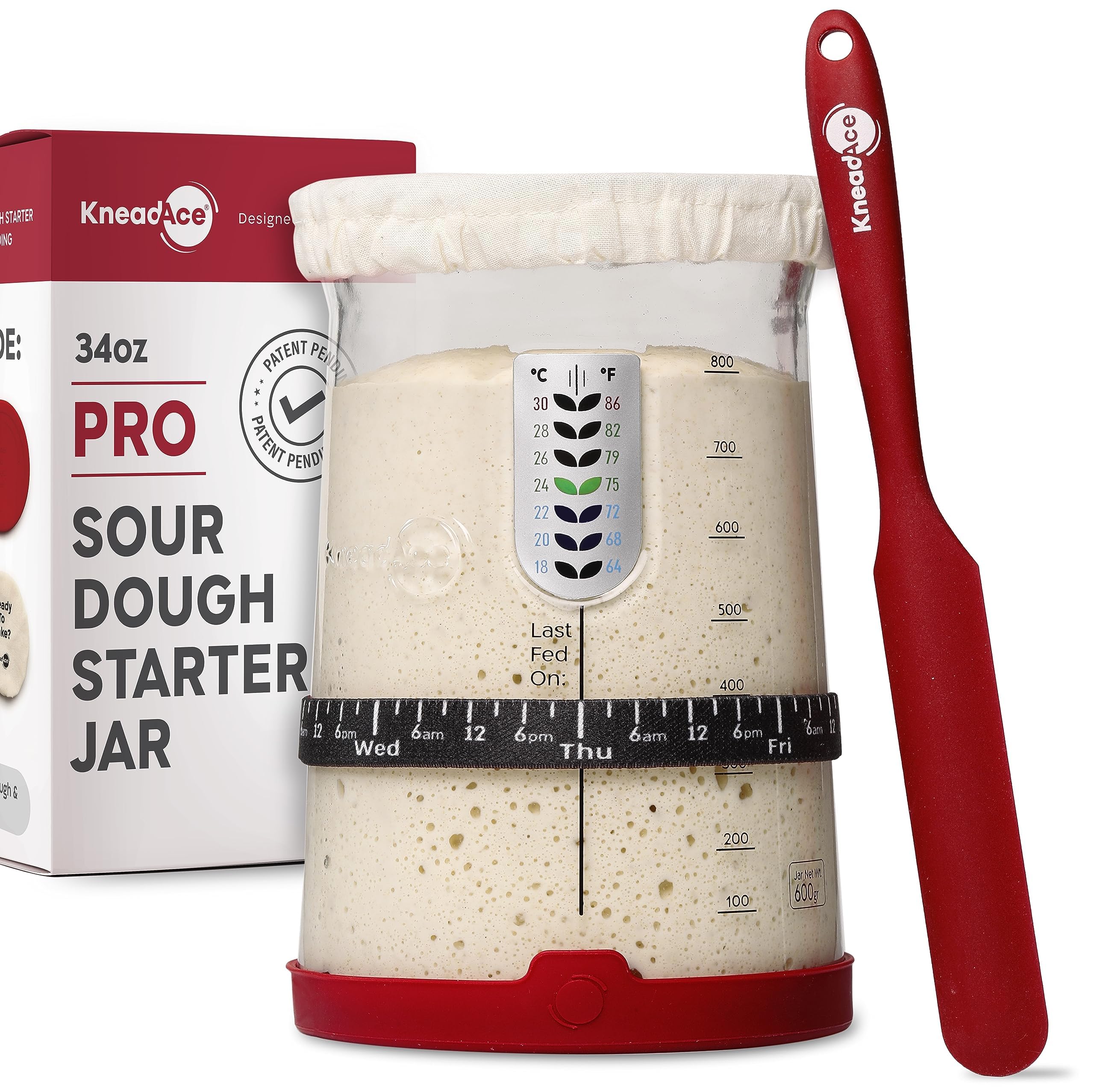
KNEADACE Pro Sourdough Starter Jar Kit, 34 oz
budget-friendly
A wide-mouth glass jar sized so a doubling starter has headroom, with the date-marker band that turns 'did it rise?' from a guess into a measurement. The wide mouth is the real feature — feeding and scraping a narrow jar is how starters get neglected.
Check Price on Amazon →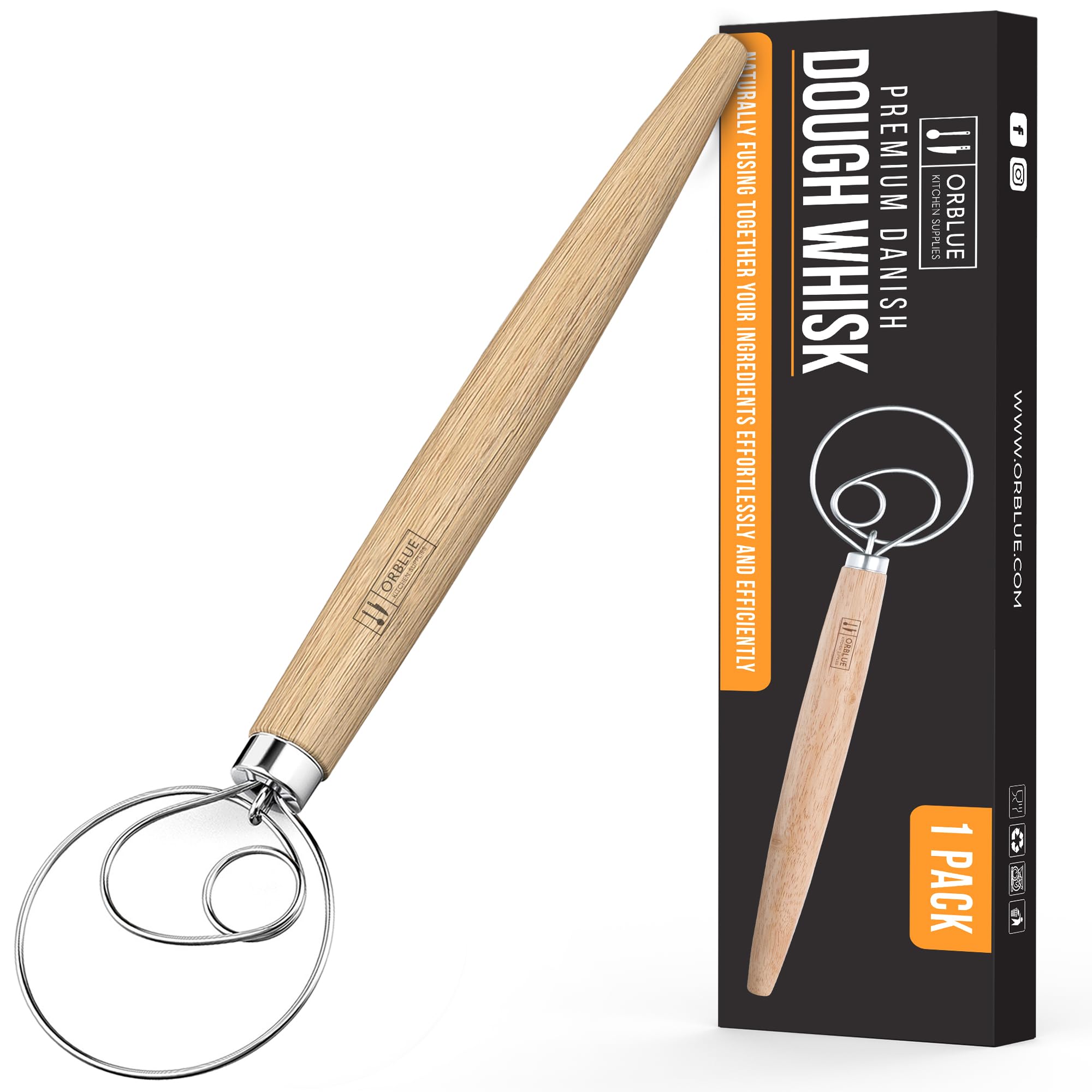
ORBLUE Premium Danish Dough Whisk, Stainless Steel
budget-friendly
The open wire ring cuts through wet dough and stiff starter without the clogging that turns a spoon or a balloon whisk into a paste-covered club. It's a five-dollar-feeling tool that quietly removes the most annoying part of daily feeding.
Check Price on Amazon →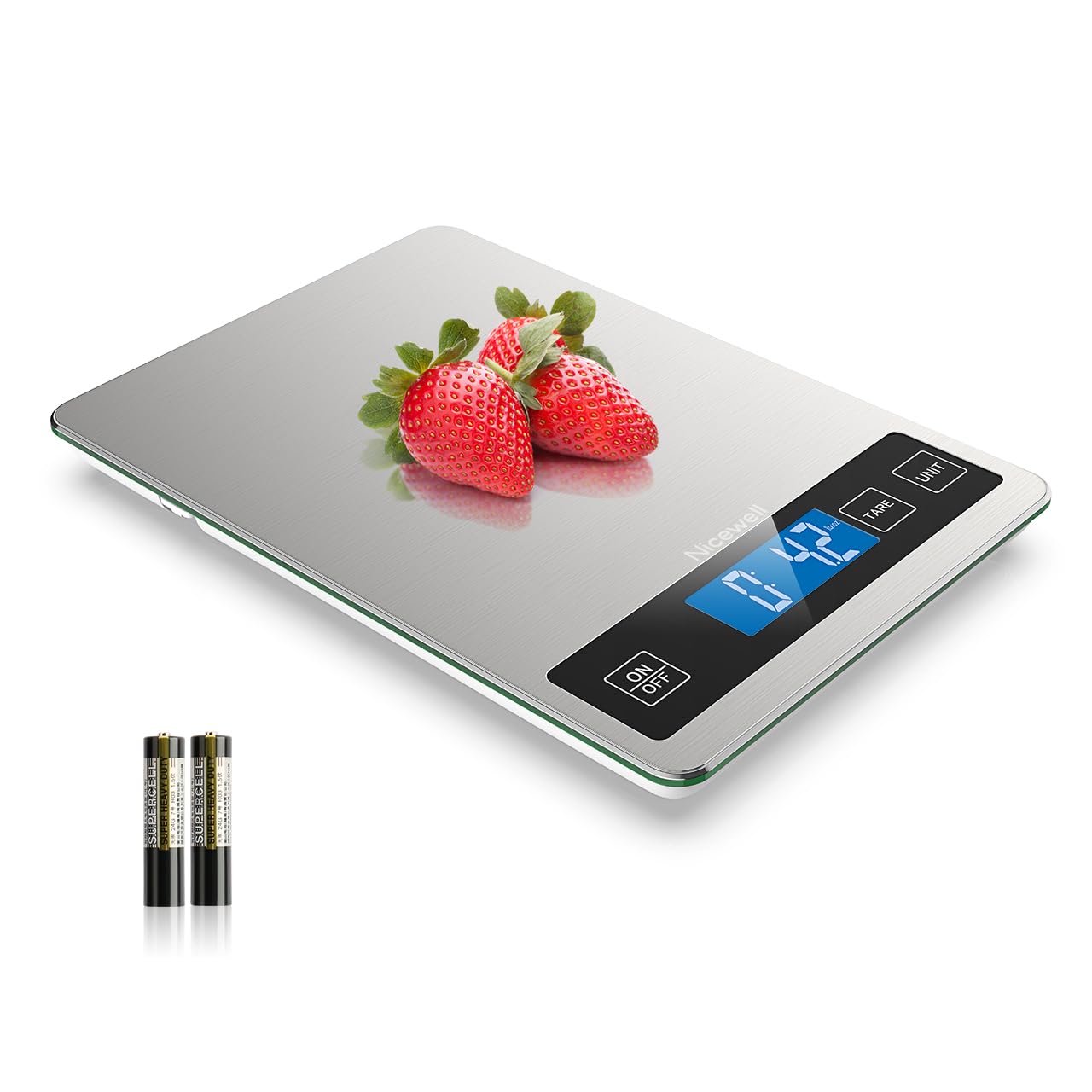
Nicewell Digital Food Scale, 22 lb Capacity
budget-friendly
Sourdough is arithmetic — feeding ratios and hydration percentages are meaningless by volume — and a 1-gram-resolution scale with a tare button makes the whole practice repeatable. This is the one item on the list a starter genuinely cannot run without.
Check Price on Amazon →Frequently Asked Questions
How long does it take to make a sourdough starter?
Usually 7 to 14 days from first mix to a starter strong enough to raise bread. It's ready when it reliably doubles within 4-6 hours of a feeding and smells pleasantly tangy. Cold kitchens take longer — warmth is the single biggest accelerator.
Why did my sourdough starter stop bubbling on day 4?
That lull is normal and it's where most people give up. The early burst comes from bacteria that then die back as acid-tolerant lactobacilli and wild yeast take over. Keep feeding on schedule and keep it warm; activity typically returns within a couple of days.
What flour is best for starting a sourdough starter?
Whole wheat or rye for the first few days — whole grains carry far more wild yeast and bacteria than white flour, so they get going faster. Once the starter is active you can transition to all-purpose or bread flour, or keep a portion of whole grain in each feeding for extra vigor.
Do I have to discard sourdough starter every time I feed it?
While building it, yes — without discarding you'd need exponentially more flour daily and rising acidity would stall the culture. Once maintained in the fridge, you discard weekly. Save the discard for pancakes, waffles, or crackers; it isn't waste unless you throw it out.
Can I use tap water for a sourdough starter?
Usually yes. If your municipal water is heavily chlorinated, let it sit out uncovered for a few hours or use filtered water — chlorine can slow a young culture. Room-temperature water is ideal; very hot water will kill the organisms you're trying to grow.
What is a 1:1:1 feeding ratio for sourdough starter?
Equal weights of starter, flour, and water — for example 50 g of starter fed with 50 g flour and 50 g water. Ratios are by weight, never volume, which is why a kitchen scale is the one non-negotiable tool. Higher ratios like 1:2:2 or 1:5:5 feed a starter more and slow its peak, useful in warm kitchens.
What is the hooch liquid on top of my sourdough starter?
A dark or grey liquid layer is alcohol produced by a hungry starter — it's a feeding signal, not spoilage. Pour it off (or stir it in for a tangier flavor) and feed more often or at a higher ratio. Throw a starter out only for fuzzy mold, orange or pink streaks, or a genuinely putrid smell.
Want to dig deeper? See our guides to What Size Dutch Oven for Sourdough?, Best Dutch Oven (2026), Best Kitchen Scale (2026), and Best Bread Box (2026).