
What size Dutch oven for sourdough is the question every new bread baker hits the week their starter comes alive — and the answer is more forgiving than the forums suggest. A standard home loaf (900g-1kg of dough) bakes beautifully in anything from 4 to 7 quarts; what changes with size is loaf geometry, steam concentration, and how far you drop the dough. Here's the size math, why round beats oval for boules, and the combo-cooker alternative that solves the drop problem entirely.
The size answer, by dough weight
The standard answer: 4-5 quarts for a 1kg loaf
A typical recipe using 500g of flour makes roughly 1kg of dough, which bakes into a boule about 8 inches across. A 4-5 quart round Dutch oven hugs that loaf closely, concentrating its steam for maximum oven spring and an aggressive, blistered crust. This is the size that makes beginner loaves look professional.
5-7 quarts: the flexible family size
The 5.5-7.25 quart class — where most people's existing Dutch oven lives — bakes the same 1kg loaf slightly flatter (more room means less steam concentration and less wall support) but handles big 1.5kg boules, double batches, and every non-bread job the other six days. If you own one Dutch oven for everything including bread, this is the honest size.
Round for boules, oval only for batards
Steam and support work best when the pot matches the loaf's shape. Round pots bake round loaves — the standard. Oval Dutch ovens bake torpedo-shaped batards well but let a round boule spread sideways into a lower, wider loaf. Match the pot to the shape you actually bake, and proof in a banneton of the same geometry.
The drop problem — and the combo cooker solution
Deep pots mean lowering fragile proofed dough three-plus inches into 450°F cast iron, which is where knuckles get burned and loaves get deflated. The Lodge Combo Cooker inverts the design: the shallow skillet side is the base — slide the loaf on flat, score it comfortably — and the deep side goes on top as the steam dome. Same physics, zero drop. Parchment slings solve the same problem in a standard pot.
Enameled or bare cast iron both work — mind the details
Enameled pots (Le Creuset, Lodge enameled) need no seasoning and show crust color honestly against light interiors, but check the knob's temperature rating — older phenolic knobs cap below the 450-500°F bread range and should be swapped for steel. Bare cast iron shrugs off any temperature but wants the same thin-oil care as a skillet. Preheat either for 30-45 minutes with the lid on before the dough goes in.
Lid on 20 minutes, lid off to finish
Whatever the vessel: bake covered for the first 20 minutes — the loaf's own moisture becomes trapped steam, which delays crust formation and lets the loaf reach full height — then remove the lid and bake another 20-25 until the crust is deeply browned. Internal temp of 205-210°F means done. This two-phase bake is what the Dutch oven is for; it turns a home oven into a steam-injected deck oven for the price of a pot.
Recommended Gear
The gear we'd reach for. Prices shown on Amazon at click-through.
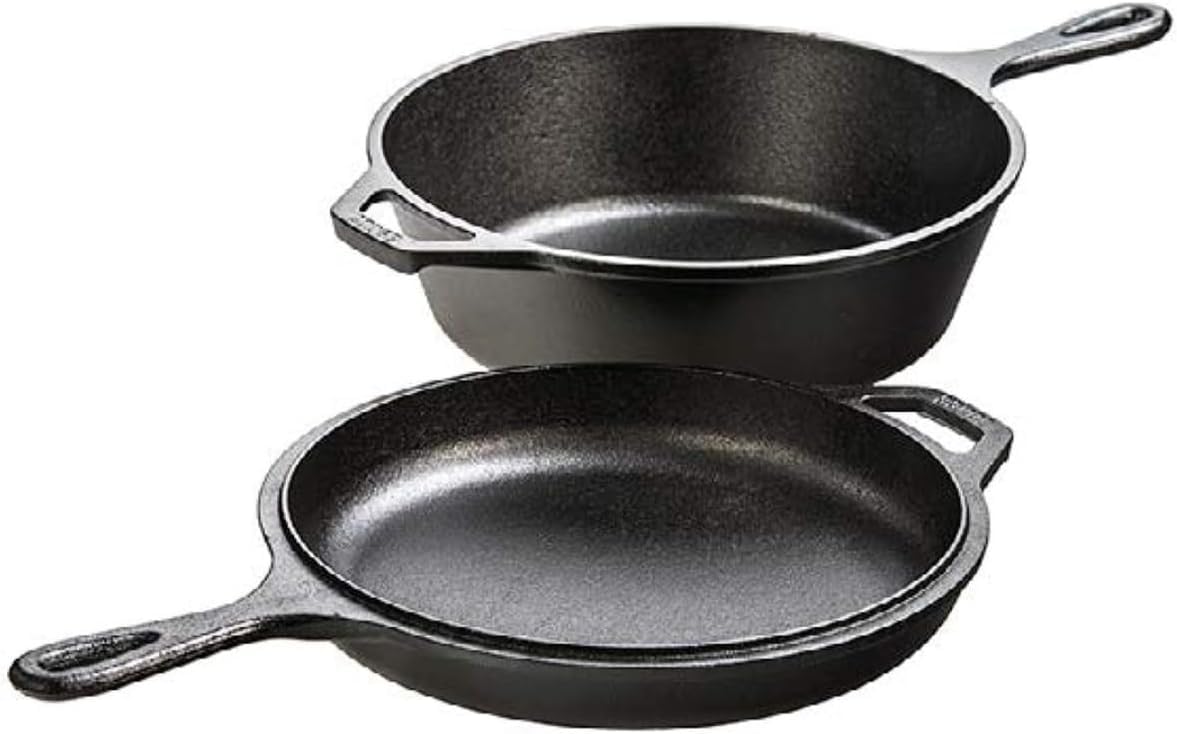
Lodge 3.2-Quart Cast Iron Combo Cooker
budget-friendly
The tool serious sourdough bakers quietly prefer to a Dutch oven: the shallow skillet side is the base, so you slide the loaf in flat instead of dropping it three inches, and the deep side flips over as the steam lid. Perfect size for a standard 1kg boule.
Check Price on Amazon →
Generic Banneton Bread Proofing Basket Set (9" Round + 10" Oval)
budget-friendly
The rattan baskets that give sourdough its spiral shell and hold the shape of a slack dough overnight in the fridge. This set covers both loaf geometries — 9-inch round for boules, 10-inch oval for batards — with liners, lame, and scraper included.
Check Price on Amazon →
Le Creuset 7.25-Quart Round Dutch Oven, Cerise
premium
The size to buy Le Creuset if bread is the mission: 7.25 quarts gives a big boule room to spring without touching the lid, the light enamel interior shows crust color honestly, and it still does everything else a Dutch oven does the other six days.
Check Price on Amazon →Frequently Asked Questions
Can a Dutch oven be too big for sourdough?
Not ruinously — a 1kg loaf in a 7-quart pot still bakes well, just slightly flatter and paler than in a snug 4-5 quart, because steam disperses into the extra volume. Too small is the real failure: a rising loaf that touches the lid burns and deforms. When between sizes, go bigger.
Do you preheat the Dutch oven before adding sourdough?
Yes, for the classic method: 30-45 minutes at 450-500°F with the pot and lid inside. The scorching thermal mass gives the bottom crust its snap and the initial spring its violence. Cold-start methods exist and work — gentler crust, easier loading — but preheated is the benchmark result.
Is a combo cooker better than a Dutch oven for bread?
For bread specifically, many bakers say yes: the shallow base eliminates the dangerous drop into a deep hot pot, scoring is easier, and the deep lid traps steam identically. As an all-purpose pot it's less versatile than a true Dutch oven — which is why plenty of kitchens end up with both.
What size Dutch oven for two loaves of sourdough?
Bake them sequentially rather than side by side — two loaves in one pot fuse and steam unevenly. Keep the second loaf cold-retarding in the fridge while the first bakes; the pot's already hot, so loaf two actually goes faster. For true simultaneous baking you need two vessels.
Can you bake sourdough in a 3.5 quart Dutch oven?
Yes, for smaller loaves — scale the dough to about 750g (roughly 375g flour) so the risen loaf clears the lid. The snug fit concentrates steam beautifully; the risk is only a full-size recipe rising into the lid and burning. Small pots make some of the best-blistered crusts.
Do you need parchment paper for sourdough in a Dutch oven?
It's the easiest insurance: a parchment sling lowers the loaf into a deep preheated pot without burned knuckles or deflated dough, and guarantees release. Well-seasoned cast iron and enameled pots technically don't need it, but a semolina-dusted bottom plus parchment is the no-surprises setup.
Want to dig deeper? See our guides to Best Dutch Oven (2026), Best Enameled Cast Iron (2026), Le Creuset vs Lodge: Is the Premium Worth It?, and How to Clean an Enameled Dutch Oven.