

Learning how to cook a turkey is mostly learning to ignore two bad habits: cooking by the clock instead of by temperature, and treating the whole bird as one thing when the breast and the thigh want to finish 10 degrees apart. Get the thaw right, season it a day ahead, roast it hot enough to brown, and pull it by thermometer — that's the entire method. Here's the timeline that works for a 12-20 pound bird, including the numbers worth writing on an index card before the holiday.
Step-by-step
Thaw it — allow 24 hours per 4-5 pounds
A frozen turkey needs about one day in the refrigerator for every 4-5 pounds, so a 16-pound bird takes roughly 3-4 days. Thaw it in a pan on the lowest shelf to catch drips. If you're out of time, the cold-water method works: keep the turkey in its wrapper, submerge in cold tap water, and change the water every 30 minutes, allowing about 30 minutes per pound. Never thaw a turkey on the counter.
Season a day ahead — dry brine is the easier win
Pat the bird completely dry, then salt it generously all over (about 1 teaspoon of kosher salt per pound), including inside the cavity and under the breast skin where you can reach. Refrigerate uncovered on a rack for 12-24 hours. The salt seasons the meat deeply and the uncovered time dries the skin, which is what makes it crisp. Wet brining in a food-grade bag also works and gives slightly moister breast meat, but it requires cooler space and yields softer skin — dry brining is the lower-effort, higher-reward option for most kitchens.
Prep for the oven: rack, aromatics, no stuffing
Take the turkey out about an hour before roasting to lose the deep chill. Remove the neck and giblets (check both ends), pat dry again, and rub the skin with softened butter or oil. Set the bird breast-up on a rack in the roasting pan so air circulates underneath, and add a cup or two of stock plus chopped onion, carrot, and celery to the pan to keep drippings from scorching. Cook stuffing separately — a stuffed bird's center reaches a safe temperature only after the breast has overcooked.
Roast at 325-350°F, about 13-15 minutes per pound
A 325°F oven is the traditional standard; 350°F browns faster with slightly less even cooking. Plan on roughly 13-15 minutes per pound for an unstuffed bird — so about 3 to 3.5 hours for a 14-pounder — but treat that as a scheduling estimate only. If the breast is browning too fast, tent it loosely with foil. Basting is optional and mostly costs you oven heat every time the door opens; dry-brined skin browns fine on its own.
Cook to temperature: 157-165°F breast, 175°F thigh
This is the step that separates a juicy turkey from a dry one. The breast is done at 157-165°F and the thigh needs about 175°F to render its connective tissue. Use a leave-in probe in the thickest part of the breast (not touching bone) and check the thigh with an instant-read. Pull the bird when the breast hits its number — carryover cooking will add several degrees during the rest, and USDA's 165°F is reached and held during that time.
Rest it 30-45 minutes before carving
Tent loosely with foil and let a whole turkey rest at least 30 minutes — up to 45 for a large bird. Resting lets the juices redistribute instead of running out onto the board, and a big turkey holds serving temperature easily for that long. This is also your window to make gravy from the drippings and finish side dishes, which is exactly why the timeline works.
Make gravy from the drippings while it rests
Pour the pan drippings into a fat separator or a measuring cup and let the fat rise. Set the roasting pan across two burners over medium heat if it's stovetop-safe, add wine or stock, and scrape up the browned bits — that fond is the flavor. Whisk in a flour-and-fat roux or a cornstarch slurry, simmer to thicken, strain, and season. Carve the bird breast-down off the frame in whole lobes, then slice across the grain.
Recommended Gear
The gear we'd reach for. Prices shown on Amazon at click-through.
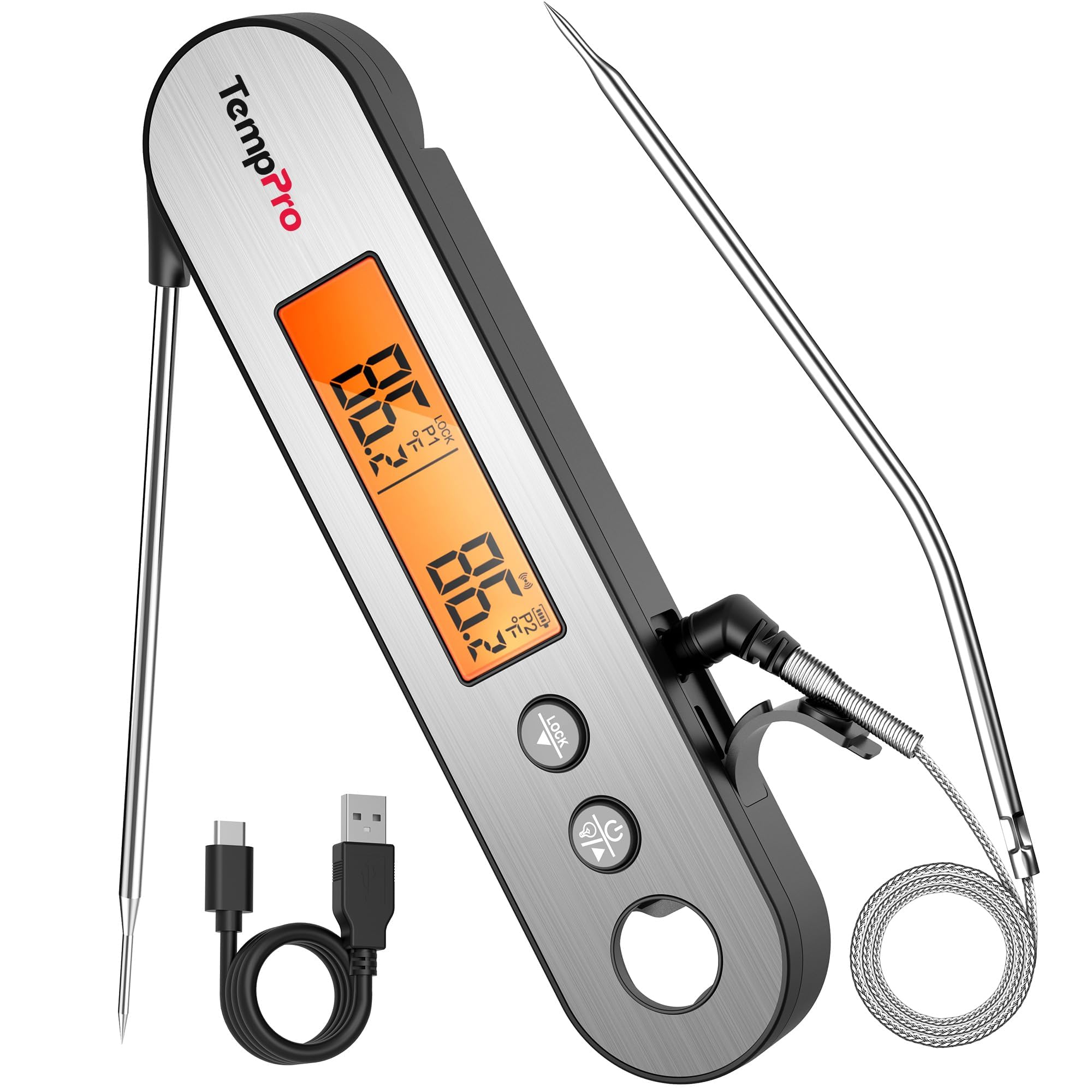
TempPro TempSwift Rechargeable Digital Meat Thermometer, Dual Probe
mid-range
The single tool that decides whether the turkey is juicy or dry. Two probes let you track breast and thigh at once without opening the oven, and the alarm means you pull the bird at temperature instead of at a per-pound estimate that was always a guess.
Check Price on Amazon →
Norpro Adjustable Roast Rack, Nickel-Plated 11-Inch
budget-friendly
Folds flat for storage, adjusts between flat-rack and V-cradle positions, and lifts the bird out of its drippings so the underside roasts instead of stewing. It's the cheapest fix for the pale, flabby turkey bottom nobody photographs.
Check Price on Amazon →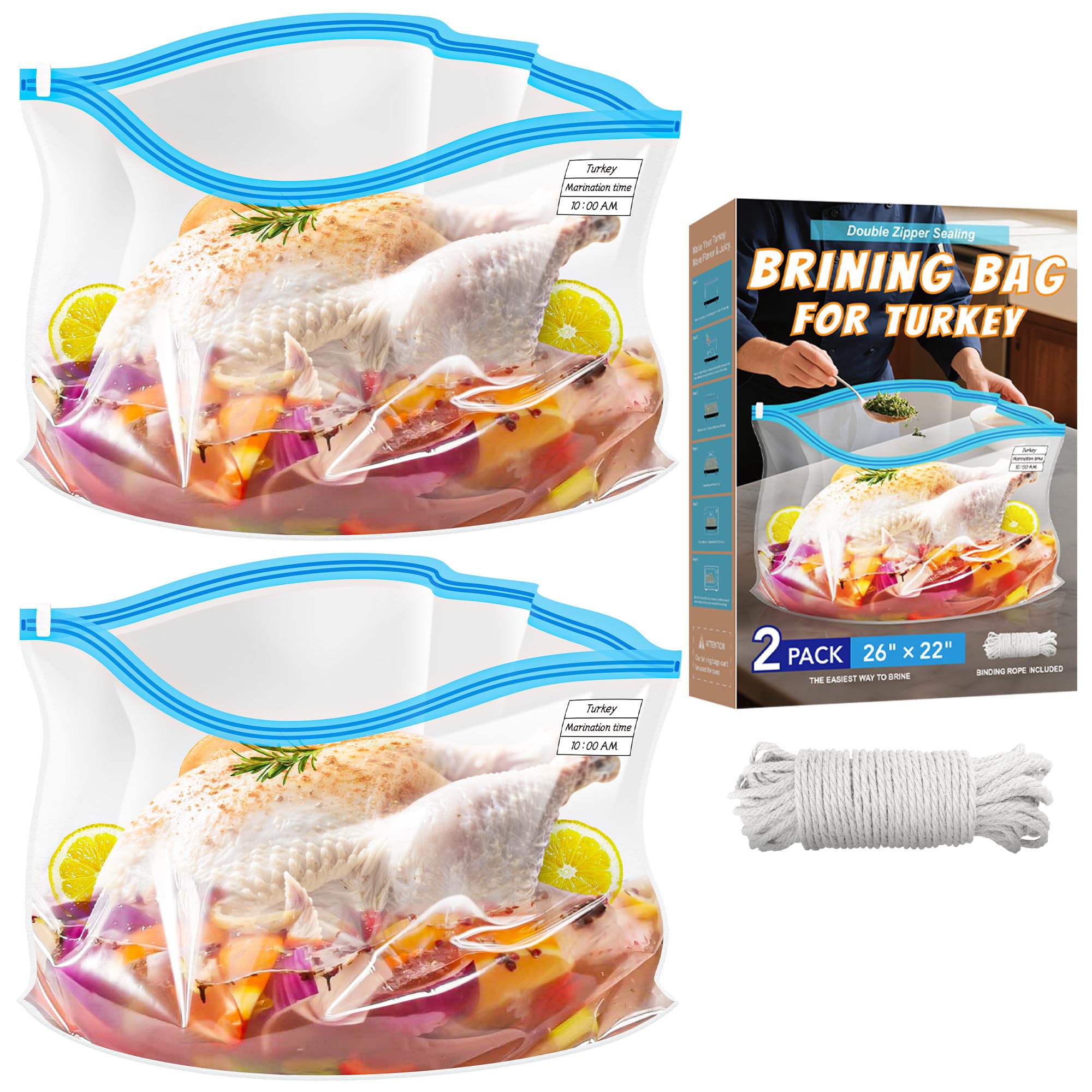
Generic Extra-Large Turkey Brining Bags with Ties, 26" x 22" (2-Pack)
budget-friendly
Wet-brining works, and the logistics are the only hard part: these food-grade bags hold a 20-plus-pound bird and its brine in a cooler or fridge shelf without the leak that ruins a holiday morning. Two per pack, because one always tears at the worst time.
Check Price on Amazon →Frequently Asked Questions
How long does it take to cook a turkey?
Plan about 13-15 minutes per pound at 325-350°F for an unstuffed bird — roughly 3 to 3.5 hours for a 14-pound turkey. Use that only for scheduling: pull the bird when a thermometer reads 157-165°F in the breast and about 175°F in the thigh, which can arrive earlier or later than the clock suggests.
What temperature should a turkey be cooked to?
157-165°F in the thickest part of the breast and about 175°F in the thigh. Carryover cooking during the rest carries the breast through the USDA's 165°F guidance. Cooking the whole bird to 165°F in the breast is the most common cause of dry turkey.
Should you brine a turkey?
Dry brining — salting generously and refrigerating uncovered 12-24 hours — is the easier and usually better option: it seasons the meat deeply and dries the skin for better browning. Wet brining gives slightly moister breast meat but needs a big food-grade bag and cooler space, and it produces softer skin.
Do you cover a turkey with foil while roasting?
Not from the start. Roast uncovered so the skin browns, and tent loosely with foil only if the breast is getting too dark before the interior is done. Covering the whole time steams the bird and leaves pale, soft skin.
How long should a turkey rest before carving?
At least 30 minutes, up to 45 for a large bird, tented loosely with foil. The juices redistribute instead of spilling onto the board, and a whole turkey holds serving temperature easily for that long — it's also exactly when you should be making the gravy.
How big a turkey do I need per person?
Plan about 1 to 1.5 pounds per person for a whole bird — that accounts for bone weight and leaves leftovers at the higher end. For 8 guests, a 10-12 pound turkey works; for 12 guests, aim for 14-18 pounds. Above about 20 pounds, two smaller birds cook faster and more evenly than one giant one.
Is it better to cook a turkey at 325 or 350 degrees?
325°F is the safer default: slower and more even, with less risk of the breast drying before the thighs finish. 350°F browns faster and shortens the cook by roughly 15-20 minutes on a mid-size bird, which suits a well-dry-brined turkey you're watching with a probe thermometer.
Want to dig deeper? See our guides to Best Roasting Pan (2026), Best Meat Thermometer (2026), Best Brisket Knife (2026), and Best Electric Smoker (2026).