

Knowing how to clean a Blackstone griddle is the difference between a flat top that gets better every year and one that's rusty by Labor Day. The good news: the correct routine takes five minutes, uses water instead of soap, and doubles as seasoning maintenance — every proper cleanup leaves the surface slightly more nonstick than before. Here's the post-cook routine, the deep-clean for when things went sideways, and the one step people skip that causes almost every rusty griddle.
Step-by-step
Scrape while it's still hot
Right after cooking, with the griddle still hot, scrape food debris and excess grease forward into the grease trough with a metal scraper held at a low angle. Heat is doing half the work here — residue that wipes off a hot surface welds onto a cold one. Push everything into the trough; that's what it's for.
Steam-clean with water
Squirt water from a squeeze bottle onto the warm surface in small amounts — it will hiss and steam immediately. The steam lifts stuck-on bits; scrape as you go, chasing the loosened residue into the trough. Repeat in sections until the scraper glides clean. Never pour cold water onto a ripping-hot griddle in one flood; work in small pours to avoid warping.
Wipe the surface dry
Wipe the entire surface with paper towels or a dedicated microfiber rag until it comes away clean and dry. Any moisture left standing on cast iron or cold-rolled steel is rust in progress — this step is not optional, and it includes the corners and the area around the grease chute.
Oil the surface — the step that prevents rust
While the griddle is still warm, drizzle a small amount of high-heat oil (canola, avocado, or flaxseed) and spread it paper-thin across the entire surface with a towel — thin enough that it looks matte, not wet. This microlayer is what blocks moisture and bakes into seasoning next cook. A griddle put away dry-but-unoiled is how most rust stories start.
Empty the grease trap and cover the griddle
Empty the grease cup once cooled (line it with foil to make this a 5-second job), wipe the trough, and cover the griddle or close its hood. Outdoor griddles need a real cover — rain and overnight condensation defeat everything you just did. If the griddle lives uncovered, budget for the rust removal step below.
Deep-clean stuck-on carbon or rust with a pumice brick
When the surface develops sticky carbon patches, gray buildup, or surface rust spots, heat the griddle, scrape what moves, then work a griddle pumice brick in circles over the problem areas with light oil. The brick cuts buildup and rust back to metal without stripping surrounding seasoning. Wipe residue away, then re-oil. For a fully rusted surface, see our full re-seasoning guide — that's a strip-and-rebuild job.
Recommended Gear
The gear we'd reach for. Prices shown on Amazon at click-through.
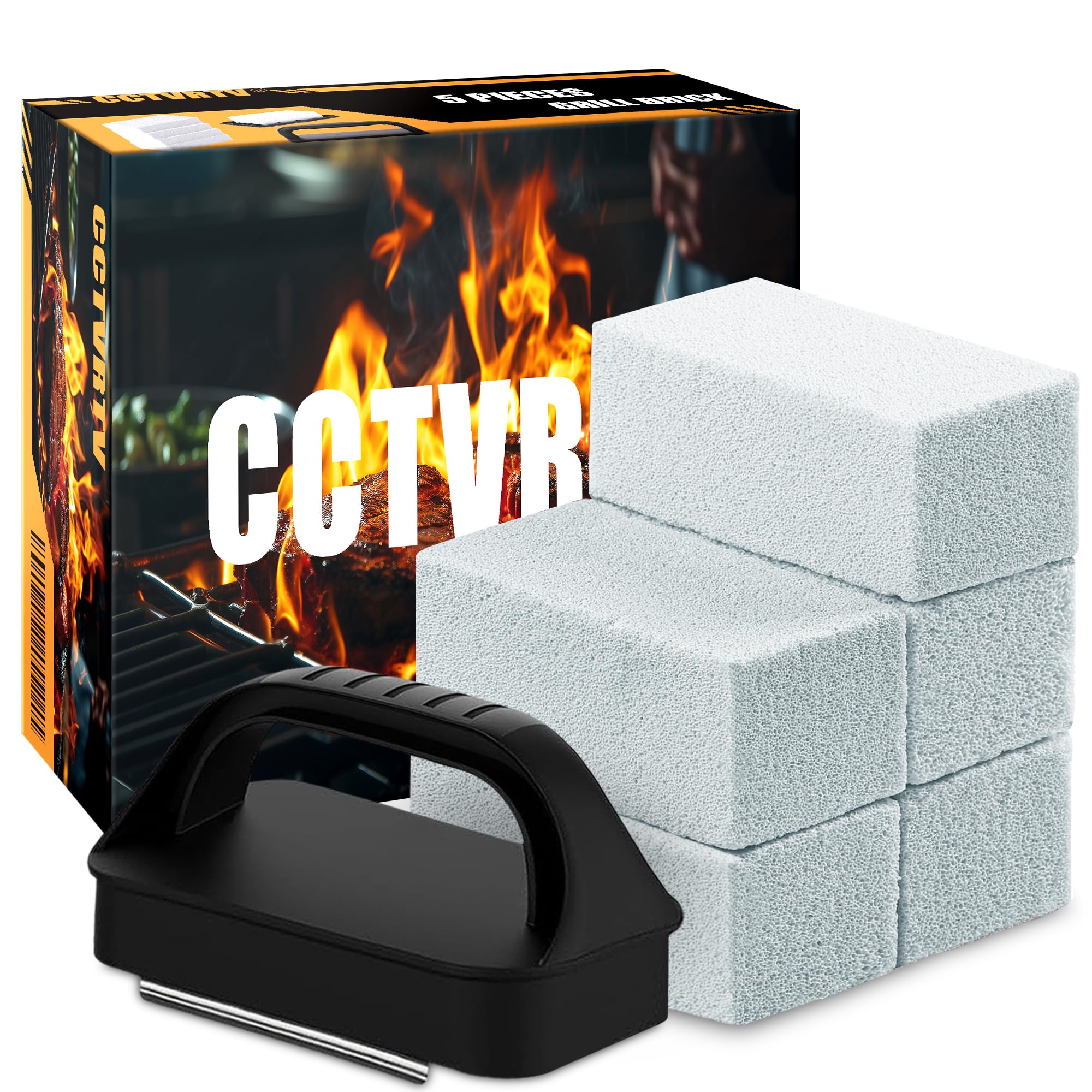
Commercial Grade Heavy Duty Griddle Cleaning Brick with Handle
budget-friendly
A pumice brick with an actual handle, so you can bear down on carbon buildup and rust spots without grating your knuckles against a hot griddle. It cuts stuck-on mess back to clean metal while leaving the surrounding seasoning alone.
Check Price on Amazon →
Generic Griddle Cleaning Kit for Flat Top Grills (Scraper, Pads & Handle)
budget-friendly
The whole post-cook routine in one box: scraper, scouring pads with a grip handle, and cleaning bricks sized for flat-top work. It's the third-party answer to the official kit — same job, lighter price.
Check Price on Amazon →
New Star Foodservice 32 oz Squeeze Bottles, 6-Pack
budget-friendly
The unsung heroes of griddle cleaning: one bottle of water for steam-scraping, one of oil for the protective wipe-down that ends every cook. Restaurant-grade 32-ounce bottles that survive being left out at the grill station.
Check Price on Amazon →Frequently Asked Questions
Can you use soap and water on a Blackstone griddle?
Skip soap for routine cleaning — water, steam, and a scraper do the job, and soap strips the seasoning you've built. The exception is a full strip-and-re-season, where soap is fine because you're rebuilding the surface from bare metal anyway.
How do you clean a Blackstone griddle after cooking?
While it's hot: scrape debris into the trough, squirt water to steam off stuck bits, scrape again, wipe completely dry, then spread a paper-thin coat of oil. Five minutes, and the surface improves each time instead of degrading.
How do you get rust off a Blackstone griddle?
Light surface rust: heat the griddle, work a pumice grill brick over the spots with a little oil, wipe clean, and re-oil. Heavy, flaking rust across the surface means stripping to bare metal and re-seasoning from scratch — recoverable, but a weekend job rather than five minutes.
What oil should you use on a Blackstone after cleaning?
Any high-smoke-point oil: canola and avocado are the workhorses, flaxseed builds the hardest layer. The amount matters more than the type — paper-thin, applied warm, looking matte rather than wet. Thick oil layers turn gummy instead of baking into seasoning.
How do you clean a Blackstone griddle for the first time?
A brand-new griddle gets washed once with soapy water to remove factory oils and metal dust, dried thoroughly, then seasoned — several thin oil coats baked past smoking point. That first wash is the one time soap is standard; after seasoning, switch to the water-and-scraper routine.
Why is my Blackstone griddle sticky after cleaning?
Too much oil in the final coat — thick oil layers turn gummy instead of curing into slick seasoning. Heat the griddle until the stickiness smokes off and repolymerizes, then wipe. Going forward, the post-clean oil layer should look matte, spread with a towel until it seems almost too thin.
Want to dig deeper? See our guides to How to Season a Blackstone Griddle, Best Blackstone Accessories (2026), Best Flat-Top Griddles (2026), and Blackstone Pizza Oven: Best Griddle-Top Attachments.