

Quick Answer
The best meat cleaver for most home cooks is the imarku 7-Inch Cleaver Knife, High Carbon Stainless — The bestselling cleaver on Amazon for a reason: German-grade high-carbon stainless with enough blade weight to break down a chicken through the joints, yet ground sharp enough to slice like a chef's knife. The pakkawood handle balances the heavy blade properly. On a tighter budget, the Utopia Kitchen 7-Inch Stainless Steel Meat Cleaver delivers most of the same performance for less.
A meat cleaver does the jobs that would destroy your chef's knife: splitting poultry through the joints, portioning ribs, halving winter squash, breaking down anything with cartilage in the way. The best meat cleaver for a home kitchen isn't the biggest — it's the one heavy enough to work by momentum but ground well enough to slice when you need it to. We compared the 2026 field's three honest answers: the do-it-all bestseller, the cheap brute-force insurance policy, and the thin Chinese-style cleaver that's secretly a better daily knife than most chef's knives.
How We Picked These
For this meat cleaver guide, we applied the framework laid out in our Editorial Policy: we evaluate materials and construction first, then weight long-term durability heavily — six-month and one-year owner-review patterns matter more than first-week impressions. We screened out products with documented reliability complaints, missing or hard-to-claim warranty support, and no-name brands without long-term service infrastructure. The picks below are the ones we'd recommend to a friend.
1. Best Overall: imarku 7-Inch Cleaver Knife, High Carbon Stainless
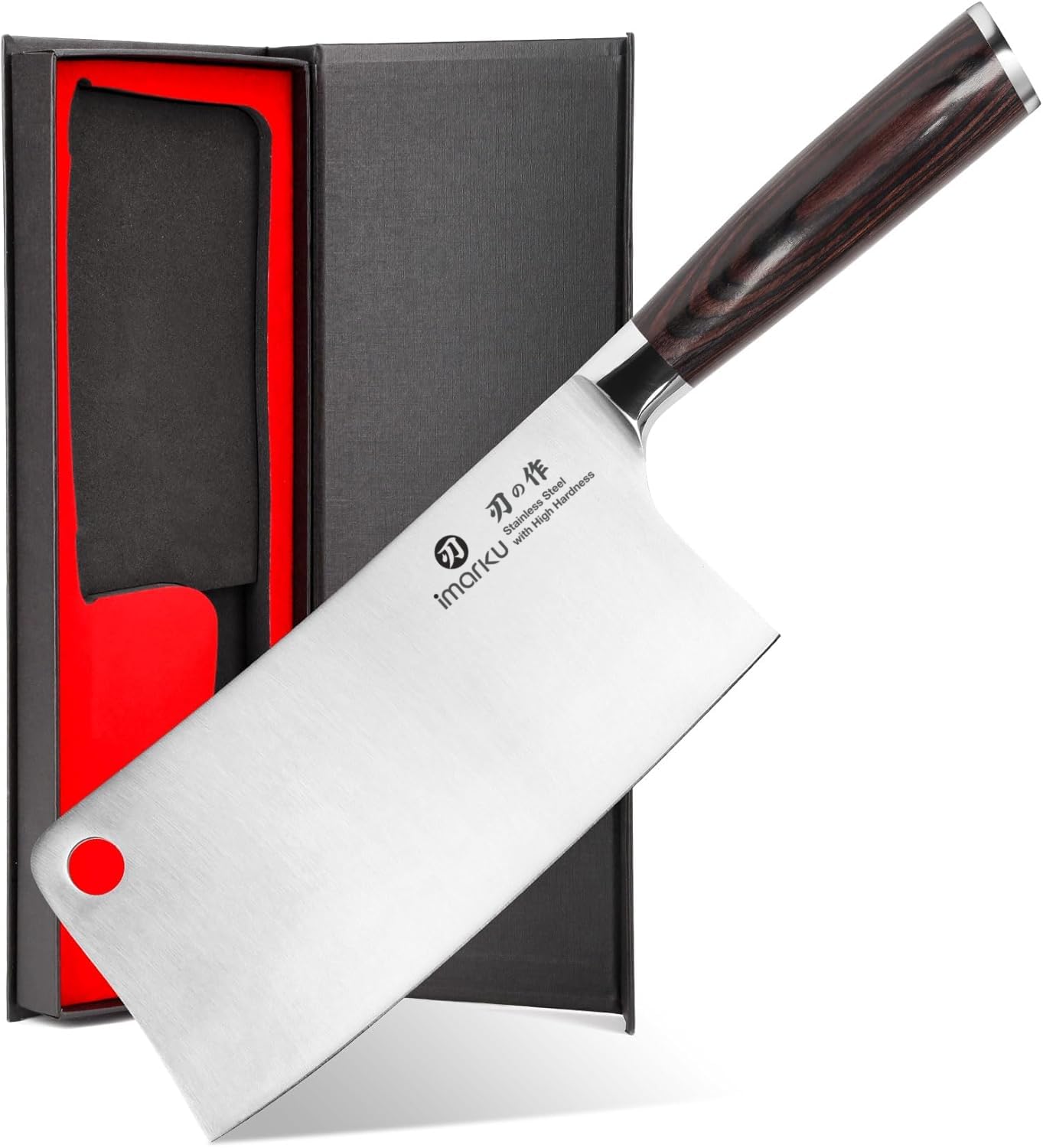
imarku 7-Inch Cleaver Knife, High Carbon Stainless
imarku
- High-carbon stainless holds an edge through bone-adjacent work
- Blade heft splits poultry joints in one motion
- Ergonomic pakkawood handle tames the weight
- Full-tang build with a lifetime replacement policy
Why we picked it: The bestselling cleaver on Amazon for a reason: German-grade high-carbon stainless with enough blade weight to break down a chicken through the joints, yet ground sharp enough to slice like a chef's knife. The pakkawood handle balances the heavy blade properly.
2. Best Value: Utopia Kitchen 7-Inch Stainless Steel Meat Cleaver
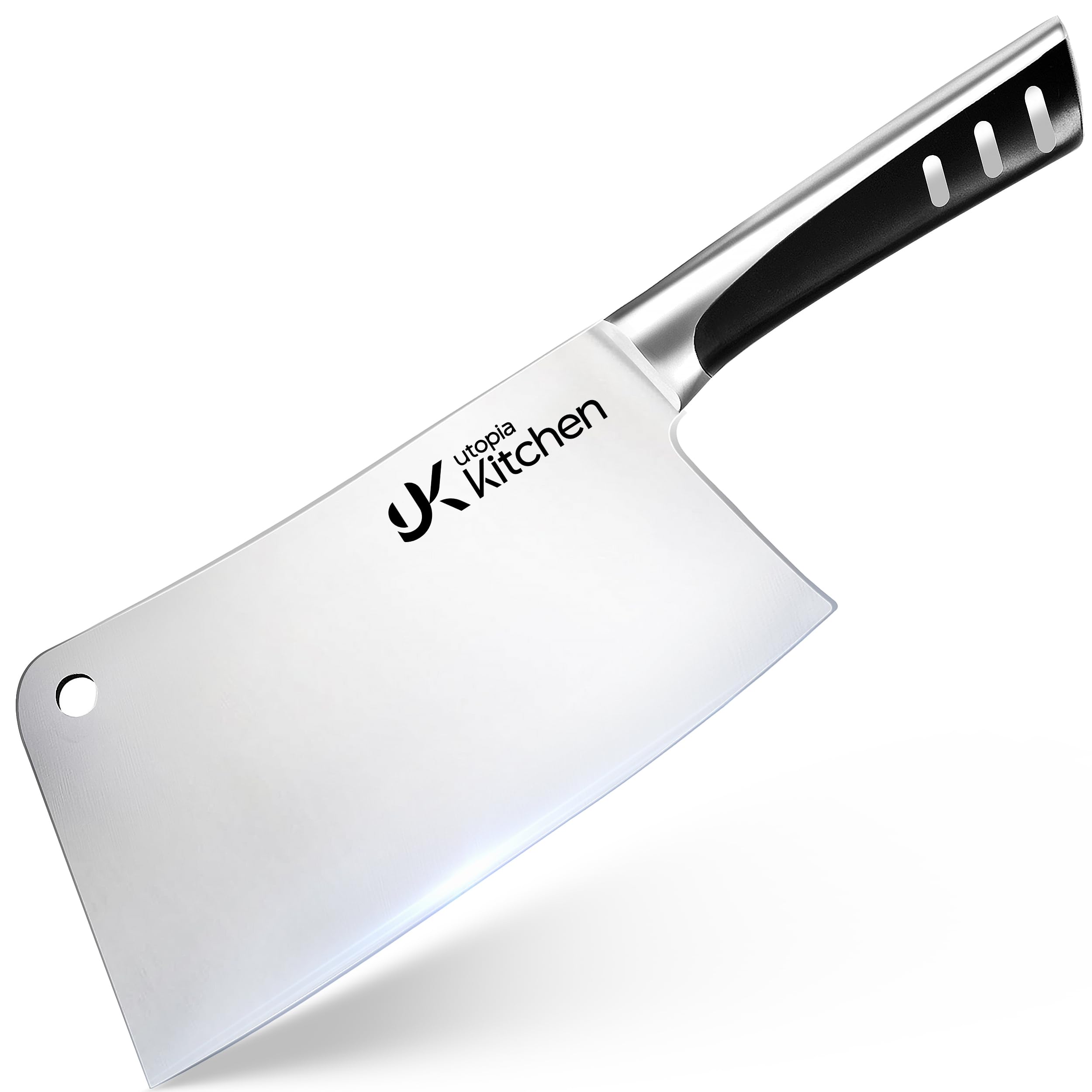
Utopia Kitchen 7-Inch Stainless Steel Meat Cleaver
Utopia Kitchen
- 100% stainless blade shrugs off rust and staining
- Enough mass for ribs, squash, and frozen blocks
- Riveted ABS handle stays put in wet hands
- The cheapest way to protect your good knives
Why we picked it: A legitimate stainless cleaver for the price of a takeout dinner. It won't hold an edge like the imarku, but for occasional rib-splitting, squash-halving, and frozen-food duty it does the brute-force jobs that would wreck your chef's knife.
3. Best Premium: SHI BA ZI ZUO 8-Inch Chinese Cleaver (Meat & Vegetable)
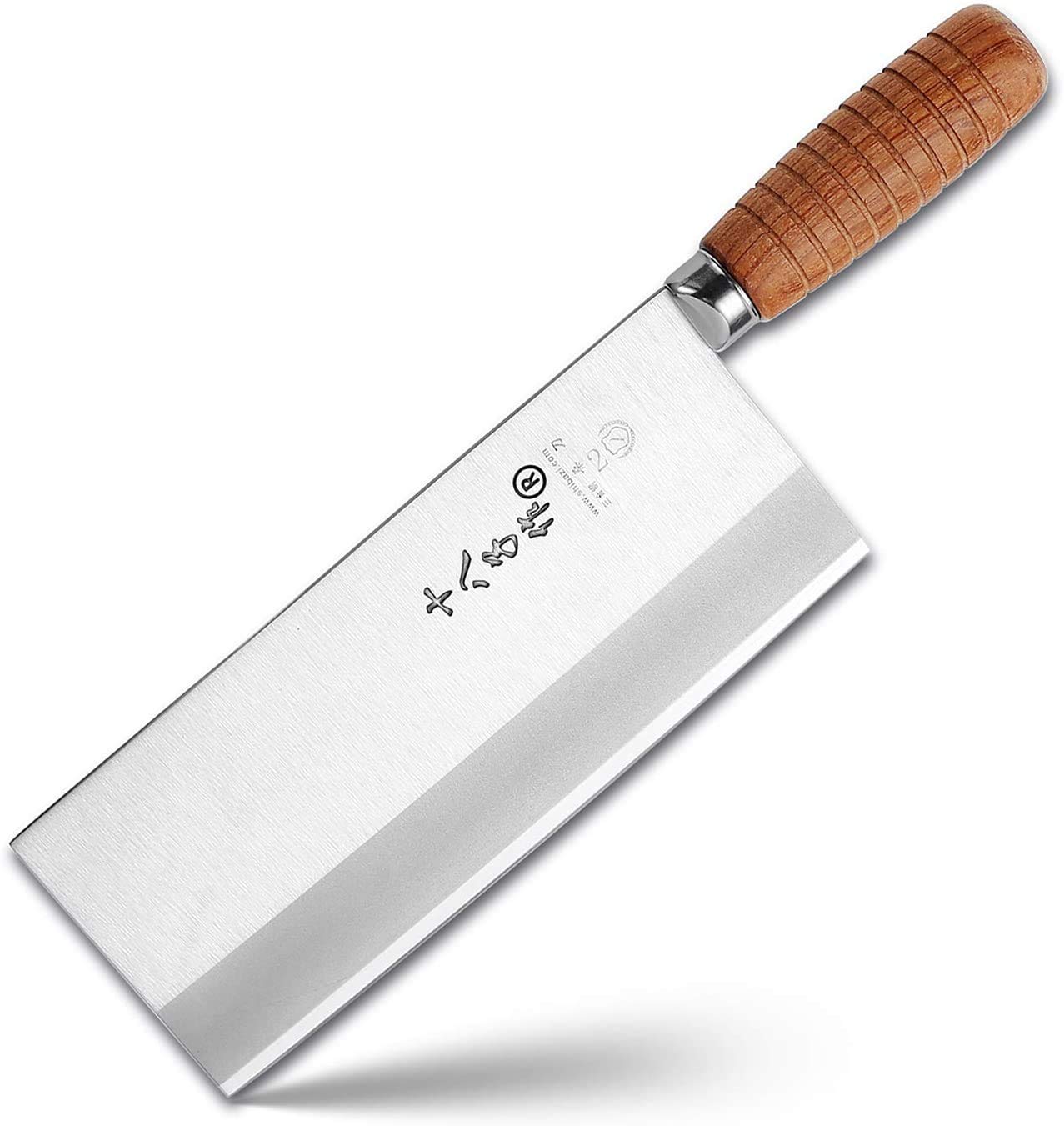
SHI BA ZI ZUO 8-Inch Chinese Cleaver (Meat & Vegetable)
SHI BA ZI ZUO
- Thin Chinese-style grind slices, dices, and scoops
- Tall blade doubles as a bench scraper
- Heritage maker with centuries of cleaver pedigree
- Composite handle balanced for all-day prep
Why we picked it: From a 400-year-old Chinese knife house: the thinner, taller cai dao pattern that Chinese cooks use for ninety percent of kitchen work. It's a slicer and vegetable machine first — the flat of the blade scoops, the edge glides — with enough spine for light meat work.
The Comparison Table
| Pick | Brand | Product | Key spec |
|---|---|---|---|
| Best Overall | imarku | imarku 7-Inch Cleaver Knife, High Carbon Stainless | High-carbon stainless holds an edge through bone-adjacent work |
| Best Value | Utopia Kitchen | Utopia Kitchen 7-Inch Stainless Steel Meat Cleaver | 100% stainless blade shrugs off rust and staining |
| Best Premium | SHI BA ZI ZUO | SHI BA ZI ZUO 8-Inch Chinese Cleaver (Meat & Vegetable) | Thin Chinese-style grind slices, dices, and scoops |
What to Look For
Western meat cleaver and Chinese cai dao are different tools wearing the same shape. The Western cleaver is thick-spined and heavy — a controlled hatchet for joints, ribs, and squash. The Chinese cleaver is thin, tall, and light, designed for slicing vegetables and boneless meat all day; its height doubles as a food scoop and knuckle guard. Buying one expecting the other's job is the category's classic mistake — the thin cai dao chips on bones it was never meant to hit.
Weight does the work — if the balance lets it. A proper Western cleaver runs 1 to 2 pounds, and the mass is the mechanism: you guide it, gravity cuts. But blade-heavy balance with a skinny handle turns that mass into wrist strain. Look for a full tang and a handle deep enough to grip hard with greasy hands; riveted pakkawood or textured composite both work.
Edge grind tells you the intended job. A meat cleaver ground at a durable 25-30 degrees per side survives cartilage contact; premium slicing cleavers ground to 15-18 degrees glide through boneless work but chip on hard contact. Check the spec — a razor edge on a heavy cleaver is a marketing mismatch that ends with a chipped blade the first rib night.
What a meat cleaver actually does better than your chef's knife
The economics are simple: a whole chicken costs less per pound than parts, and eight-piecing one takes ninety seconds with a cleaver that would risk the edge — and the geometry — of a good chef's knife. Through-the-joint cuts on poultry, portioning racks of ribs between the bones, splitting lobster, opening hard squash and celery root: these are momentum jobs, and momentum is what a cleaver is. The technique is a firm guided drop, not a chop — let the blade's weight fall through the target with your hand steering, fingers of the guide hand well clear and curled.
The flat of the blade is a tool too: smash garlic by the head, crush lemongrass, flatten a chicken breast for even searing. Pair the cleaver with a board that can take it — our cutting board roundup covers the end-grain blocks that absorb heavy blows without scarring — and see the meat knife guide for the slicing side of the butchery station.
Caring for a meat cleaver so it lasts decades
Cleavers are low-maintenance but not no-maintenance. Hand wash and dry immediately — high-carbon stainless resists rust, it doesn't ignore it, and dishwasher heat wrecks handles and edges alike. Sharpening is more forgiving than with fine knives: the working edge is coarser by design, so a few passes per side on a whetstone's medium grit twice a year covers typical home use. Steel the edge lightly after bone-adjacent sessions to realign any rolls.
Two habits prevent the common failures. Don't twist the blade to pry apart a joint you didn't cut cleanly — re-strike instead; lateral prying is how edges chip and tangs loosen. And store it like the oversized blade it is: a magnetic strip or dedicated slot, never loose in a drawer where its weight makes it the most dangerous thing to reach past. If your cleaver work leans toward brisket and large roasts, the brisket knife roundup covers the long slicers that finish what the cleaver starts.
Buyer Scenario Decision Matrix
Stop comparing specs. Start with what you're actually doing, then the right product is obvious:
| Your Situation | Buy This | Skip This | Why |
|---|---|---|---|
| Most people — daily use, no compromises | imarku 7-Inch Cleaver Knife, High Carbon Stainless | Premium-only sets you won't grow into | High-carbon stainless holds an edge through bone-adjacent work |
| Budget-conscious or first-time buyer | Utopia Kitchen 7-Inch Stainless Steel Meat Cleaver | Premium upgrade you may not need yet | 100% stainless blade shrugs off rust and staining |
| Heavy daily use, splurge, or buy-once-keep-forever | SHI BA ZI ZUO 8-Inch Chinese Cleaver (Meat & Vegetable) | Cheaper sets — you'll outgrow them | Thin Chinese-style grind slices, dices, and scoops |
Bottom Line: Which Should You Buy?
For most people: the imarku 7-Inch Cleaver Knife, High Carbon Stainless. The bestselling cleaver on Amazon for a reason: German-grade high-carbon stainless with enough blade weight to break down a chicken through the joints, yet ground sharp enough to slice like a chef's knife. The pakkawood handle balances the heavy blade properly.
On a budget: the Utopia Kitchen 7-Inch Stainless Steel Meat Cleaver. A legitimate stainless cleaver for the price of a takeout dinner. It won't hold an edge like the imarku, but for occasional rib-splitting, squash-halving, and frozen-food duty it does the brute-force jobs that would wreck your chef's knife.
Worth the splurge: the SHI BA ZI ZUO 8-Inch Chinese Cleaver (Meat & Vegetable). From a 400-year-old Chinese knife house: the thinner, taller cai dao pattern that Chinese cooks use for ninety percent of kitchen work. It's a slicer and vegetable machine first — the flat of the blade scoops, the edge glides — with enough spine for light meat work.
Ready to buy?
Jump straight to our top picks on Amazon — prices shown at click-through.
Frequently Asked Questions
What's the difference between a meat cleaver and a Chinese cleaver?
Thickness and mission. A Western meat cleaver has a thick spine and blunt-durable edge for bones, joints, and squash. A Chinese cleaver (cai dao) is thin and light — a general-purpose slicer for vegetables and boneless meat that most Chinese cooks use for nearly everything. The thin style should never hit bone.
Can a meat cleaver cut through bone?
Through joints, cartilage, soft poultry bones, and rib separation, yes — that's the job. Thick beef leg bones are a bone-saw job, not a cleaver job; hard impacts on dense bone will eventually chip any edge. Cut between bones at the joints and let the blade's weight do the work.
How heavy should a meat cleaver be?
Most home-kitchen Western cleavers run 1 to 2 pounds. Heavier falls through joints more easily but fatigues your wrist; lighter needs more force from you. The 7-inch, roughly 1.5-pound class — where the imarku sits — is the sweet spot for mixed home use.
How do you sharpen a meat cleaver?
Same motion as any knife, coarser target: hold about 25 degrees per side on a medium whetstone grit and take a few passes per side until the edge bites paper. Cleavers don't need a polished razor edge — durability at the edge matters more than push-cutting sharpness.
What is the top-rated meat cleaver for 2026?
Our top-rated pick is the imarku 7-Inch Cleaver Knife, High Carbon Stainless. The bestselling cleaver on Amazon for a reason: German-grade high-carbon stainless with enough blade weight to break down a chicken through the joints, yet ground sharp enough to slice like a chef's knife. The pakkawood handle balances the heavy blade properly.
Which meat cleaver is best for beginners or a tighter budget?
The best-rated value pick is the Utopia Kitchen 7-Inch Stainless Steel Meat Cleaver — A legitimate stainless cleaver for the price of a takeout dinner. It won't hold an edge like the imarku, but for occasional rib-splitting, squash-halving, and frozen-food duty it does the brute-force jobs that would wreck your chef's knife.
What is a Chinese cleaver used for?
Nearly everything except bones: slicing meat and vegetables, dicing, smashing garlic and ginger with the blade flat, then scooping the prep board clean with the blade's height. It's the primary daily knife in most Chinese kitchens — a thin slicer shaped like a cleaver, not a bone chopper.
Do you need a cleaver to cut a whole chicken?
For eight-piecing through joints, kitchen shears or a chef's knife through the joint gaps work fine. The cleaver earns its place when you're going through bone — splitting the backbone, halving the bird, or portioning bone-in pieces — where its weight does in one stroke what other knives shouldn't attempt.
Want to dig deeper? See our guides to Best Knife for Cutting Meat (2026), Best Brisket Knife (2026), Best Chef's Knife (2026), and How to Store Kitchen Knives Safely.